
HS2 Whistleblower – An Insider’s Account of Britain’s Most Controversial Infrastructure Project
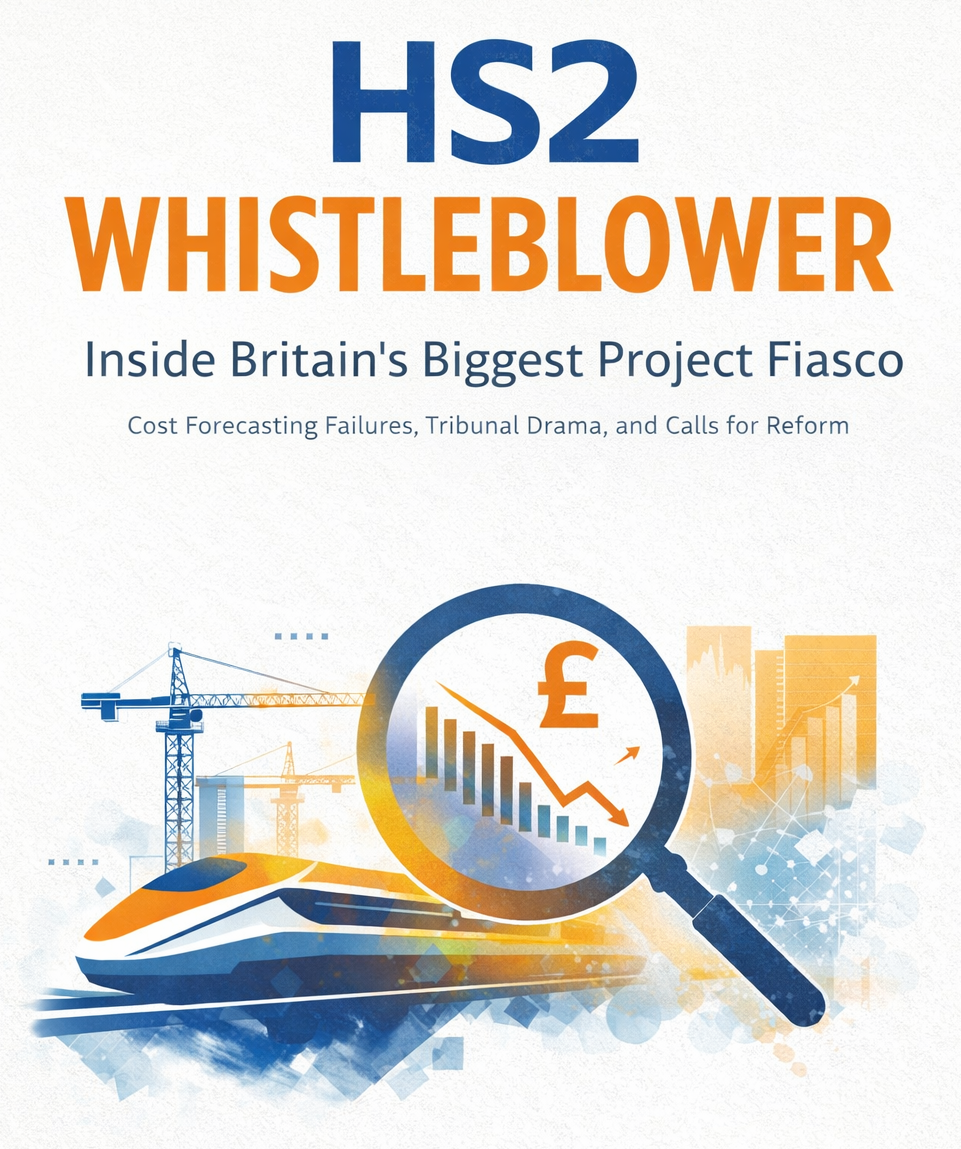
HS2 Whistleblower is the working title of my upcoming book about cost forecasting failures in HS2, the tribunal, and the reforms needed for UK infrastructure.
This page reflects the author’s opinions based on publicly available evidence and should not be taken as asserting unlawful conduct by specific persons without citation
HS2 Whistleblower: What’s in the book
What happens when a senior analyst discovers billions of pounds in cost discrepancies on the UK’s largest infrastructure project—and decides to speak out?
20+ years as a project risk and value management specialist, then turned HS2 Whistleblower. I identified systematic problems in HS2’s cost forecasting. My decision to ‘blow the whistle’ (actually a rising crescendo) led to an Employment
Tribunal and national media coverage. It exposed fundamental failures in how Britain delivers major projects.
My planned book will tell the full story for the first time: the technical evidence, the personal cost, and the systemic reforms needed.
Please register your interest if you would like to read this book.
Section 1 – Risk on Infrastructure Projects
It is often said that Britain has a shocking track record of infrastructure project failures. From cost overruns to schedule delays, we repeatedly fail to deliver what we promise. But is it true that Britain is particularly bad and if so why?
This section explores:
- Why large infrastructure projects systematically underestimate costs and overestimate benefits
- How small, insular teams with unchecked authority can make catastrophic decisions
- The role of optimism, strategic misrepresentation, and institutional pressure
- How risk analysis can be misused rather than be a genuine analysis
- International comparisons: what other countries get right that we get wrong
- The structural incentives that reward poor forecasting and punish honesty
Section 2 – My Experience at HS2
In 2014 I worked on the Higgins Review of HS2, I thought it was a joke. I wasn’t surprised costs had doubled when I returned to HS2 in 2018. What I subsequently experienced and discovered end my career.
This section explores:
- The specific cost discrepancies I identified—why they mattered, and why I believed the cost forecasting processes were potentially fraud
- What the public were told vs reality
- My decision to raise concerns formally —and what happened next
- The Employment Tribunal: evidence, vindication, HS2’s admission of liability
- The HS2 investigation was, in my opinion, a white wash. The Judge stated that HS2 should ‘have undertaken a reasonable enquiry into the matter and found all of the emails/Teams messages that were subsequently provided. They have given no explanation why they did not’
- Media coverage including Sunday Times, Daily Telegraph, City AM, The Observer & Financial Times and public reaction
- How my concerns were not addressed by government or oversight bodies
- The aftermath: professional impact and
changing direction
This is about integrity under pressure, institutional defensiveness, and the personal cost of speaking out. I’ll share documents, communications, and insights that have been made public.
Section 3 – Adapting to the Future
Exposing problems isn’t enough. We need systemic reform of organisations and institutions if Britain is ever to deliver infrastructure effectively. We are entering a period of massive technological change. This means that how infrastructure projects should be selected, funded and delivered will fundamentally change.

This section puts forward a blueprint for “infrastructure projects the public can trust”:
- Structural reforms to governance and accountability
- Changes to procurement that reward accuracy over optimism
- Enhanced protections for whistleblowers
- Independent oversight mechanisms with real teeth
- Cultural change: how to create organisations that value truth over reassurance
- Lessons for other sectors facing similar transparency challenges
These are practical reform ideas grounded in evidence from successful projects worldwide and the painful lessons of HS2. Some require legislation; others need leadership. All are achievable—if we have the will.